What is Bitcoin?
Bitcoin is a decentralized digital currency, or cryptocurrency, without a central bank or single administrator, allowing peer-to-peer transactions on the blockchain.
This article was produced with AI assistance and reviewed for accuracy.
Content is for informational purposes only and does not constitute financial advice.
Launch Year
2009
Creator
Satoshi Nakamoto
Max Supply
21 million BTC
Circulating Supply
~19.7 million BTC
Consensus
Proof of Work
Block Time
~10 minutes
What is Bitcoin?
Bitcoin (BTC) stands as the pioneering decentralized digital currency, often referred to as "digital gold," that revolutionized the concept of money in the 21st century. Launched in 2009 by an anonymous entity or group known as Satoshi Nakamoto, Bitcoin introduced a peer-to-peer electronic cash system designed to operate without the need for central banks or government interference. Its creation laid the foundation for an entirely new asset class – cryptocurrencies – and ignited a global movement towards decentralized finance (DeFi).
At its core, Bitcoin is a form of digital money that exists purely as computer code. Unlike traditional fiat currencies like the US dollar or Euro, which are issued and controlled by central authorities, Bitcoin is managed by a distributed network of computers, known as "nodes." This network collectively maintains a public ledger of all transactions, called the "blockchain." Every Bitcoin transaction is recorded on this blockchain, creating an immutable and transparent history that is accessible to anyone. This transparency, coupled with the cryptographic security underpinning the system, makes Bitcoin both secure and resistant to censorship.
The total supply of Bitcoin is capped at 21 million units. This scarcity is a fundamental aspect of its design, distinguishing it from fiat currencies that can be printed indefinitely, often leading to inflation. This limited supply, combined with growing adoption and utility, contributes to Bitcoin’s perceived value and its role as a store of value. As of November 2023, approximately 19.5 million Bitcoins have been mined, with the remaining coins to be released gradually over many decades through a process called "mining."
How It Works
The operation of Bitcoin relies on several key technological pillars: blockchain technology, cryptography, and a consensus mechanism known as Proof-of-Work (PoW).
Blockchain Technology
The blockchain is a distributed, immutable ledger that records all Bitcoin transactions. It's a chain of "blocks," where each block contains a list of verified transactions. Once a block is added to the chain, it becomes incredibly difficult to alter, ensuring the integrity and security of the entire network. This distributed nature means there's no single point of failure; even if some nodes go offline, the network continues to operate.
Cryptography
Every Bitcoin transaction is secured using public-key cryptography. When a user wants to send Bitcoin, they use their private key to "sign" the transaction. This signature proves ownership of the Bitcoin without revealing the private key. Others on the network can verify the signature using the sender's public key. This cryptographic proof ensures that only the rightful owner can spend their Bitcoins and prevents fraudulent transactions.
Proof-of-Work (PoW)
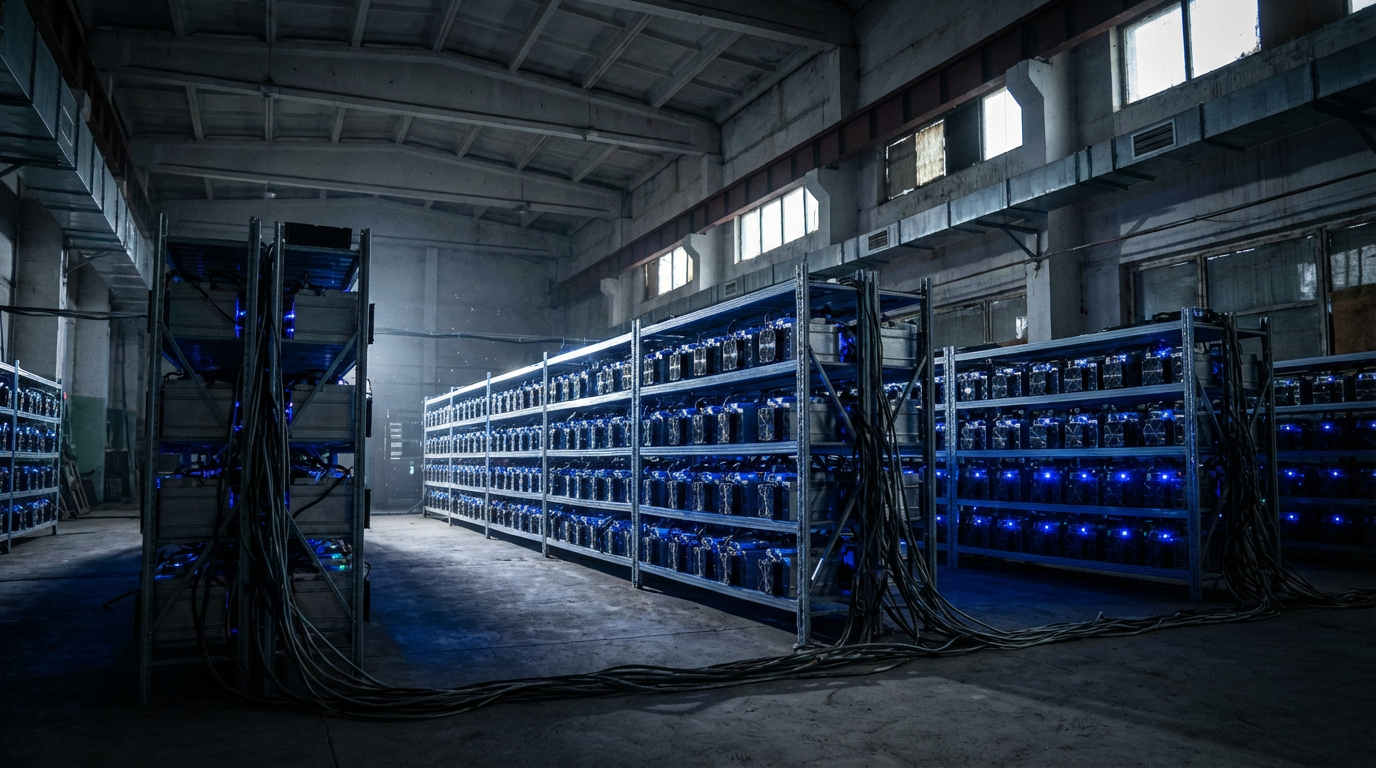
New Bitcoins are introduced into circulation and transactions are verified through a process called "mining," which uses a Proof-of-Work consensus mechanism. Bitcoin miners are powerful computers that compete to solve complex mathematical puzzles. The first miner to solve the puzzle gets to add the next block of transactions to the blockchain and is rewarded with newly minted Bitcoins (the "block reward") plus any transaction fees. This computational effort ensures the security of the network by making it extremely expensive and impractical for any single entity to control or manipulate the blockchain. The block reward halves approximately every four years in an event known as "halving" or "halvening." The first halving occurred on November 28, 2012, reducing the reward from 50 BTC to 25 BTC. The most recent halving was on May 11, 2020, dropping the reward from 12.5 BTC to 6.25 BTC.
Transactions
When a Bitcoin transaction occurs, it is broadcast to the network of nodes. Miners collect these transactions and bundle them into a block. Once a miner successfully solves the PoW puzzle, the new block is added to the blockchain, and the transaction is considered confirmed. Multiple confirmations (typically six) are often recommended for large transactions to ensure their finality and prevent double-spending.
Historical Context
The concept of digital cash predates Bitcoin, with several attempts in the 1990s like DigiCash and B-Money ultimately failing due to various challenges, including centralized control and scalability issues. The desire for a truly decentralized electronic cash system persisted within cypherpunk circles.
On October 31, 2008, Satoshi Nakamoto published the whitepaper titled "Bitcoin: A Peer-to-Peer Electronic Cash System," outlining the design principles of the new digital currency. This seminal document addressed many of the shortcomings of previous attempts by proposing an innovative combination of cryptography, distributed ledger technology, and a novel consensus mechanism.
"The root problem with conventional currency is all the trust that's required to make it work. The central bank must be trusted not to debase the currency, but the history of fiat currencies is full of breaches of that trust." - Satoshi Nakamoto, 2009
The Bitcoin network went live on January 3, 2009, with the mining of the "genesis block" by Satoshi Nakamoto. This block contained the famous message: "The Times 03/Jan/2009 Chancellor on brink of second bailout for banks," a clear nod to the financial crisis that underpinned the motivation for creating a trustless monetary system.
Early adoption was slow, predominantly among tech enthusiasts and cypherpunks. The first recorded real-world transaction occurred on May 22, 2010, when Laszlo Hanyecz famously paid 10,000 BTC for two Papa John's pizzas. This date is now celebrated as "Bitcoin Pizza Day."
Bitcoin's value was initially negligible, often traded for mere fractions of a cent. Its price began to appreciate as awareness grew. By July 2010, its price crossed $0.08. The first major price surge occurred in 2013, with Bitcoin reaching over $1,100 by the end of the year, only to crash dramatically in 2014. Subsequent bull and bear cycles have marked its journey, with significant peaks in 2017 (reaching nearly $20,000) and 2021 (surpassing $68,000), cementing its status as a volatile yet compelling asset.
Current Relevance
Bitcoin's relevance in the global financial and technological landscape continues to grow. It is increasingly recognized as:
A Store of Value
Often dubbed "digital gold," Bitcoin's finite supply and resistance to inflation make it an attractive store of value for investors seeking an alternative to traditional assets, especially during periods of economic uncertainty or currency debasement. Institutional adoption has been a significant driver in this narrative, with companies like MicroStrategy accumulating substantial Bitcoin holdings and financial services firms launching Bitcoin investment products. In January 2024, the U.S. Securities and Exchange Commission (SEC) approved several spot Bitcoin Exchange-Traded Funds (ETFs), a landmark decision that further integrated Bitcoin into mainstream finance.
A Medium of Exchange
While still facing challenges with scalability and transaction costs for small everyday purchases, Bitcoin is used as a medium of exchange in various contexts. El Salvador famously became the first country to adopt Bitcoin as legal tender in September 2021. Peer-to-peer transactions, international remittances, and payments for goods and services in niche markets continue to utilize Bitcoin's decentralized nature.
A Catalyst for Innovation
Bitcoin's underlying blockchain technology inspired the creation of thousands of other cryptocurrencies and revolutionized various industries beyond finance. It demonstrated the power of decentralized networks, smart contracts, and cryptographic security, leading to the development of DeFi, NFTs, and Web3 applications.
A Protector of Financial Freedom
In regions with unstable economies, high inflation, or authoritarian governments, Bitcoin offers an alternative financial system that is censorship-resistant and accessible to anyone with an internet connection. It provides a means of preserving wealth and conducting transactions outside the control of central authorities.
"Cryptocurrencies are simply another form of money that operates without a central authority, allowing for peer-to-peer transactions over the internet. Bitcoin is the most prominent example of this." - Christine Lagarde, President of the European Central Bank, 2021
Key Signals / Warning Signs
- Regulatory Scrutiny: Increased government regulation or outright bans in certain jurisdictions could significantly impact Bitcoin's price and adoption. Keep an eye on announcements from major economies.
- Network Congestion and Fees: During periods of high demand, the Bitcoin network can become congested, leading to higher transaction fees and slower confirmation times. This can hinder its utility as a medium of exchange.
- Technological Advancements: The development of more efficient or secure blockchain technologies could pose a challenge to Bitcoin's dominance, though its first-mover advantage and network effect are substantial.
- Security Breaches: While the Bitcoin blockchain itself is incredibly secure, exchanges and wallets holding Bitcoin can be targets for hackers. Major security breaches can erode trust and impact prices.
- Macroeconomic Factors: Bitcoin's price often correlates with broader macroeconomic trends, including inflation rates, interest rates, and geopolitical events.
- Volatility: Due to its relatively young age and speculative nature, Bitcoin's price can experience extreme volatility. Be prepared for significant price swings.
- Environmental Concerns: The energy consumption of Bitcoin's Proof-of-Work mining process has drawn criticism. Increasing adoption of renewable energy sources by miners or advancements in alternative consensus mechanisms could mitigate this concern.
Key Takeaways
Bitcoin is more than just a digital currency; it is a foundational technology that introduced the world to decentralized finance and the power of distributed ledgers. Its finite supply, transparent operation, and resistance to censorship challenge traditional financial paradigms. While subject to volatility and ongoing regulatory evolution, Bitcoin’s role as a store of value and an engine for technological innovation continues to solidify. Understanding its mechanics, history, and the factors influencing its market is crucial for anyone engaging with the cryptocurrency Bsector.
Frequently Asked Questions
What makes Bitcoin different from traditional currencies?+
Bitcoin differs from traditional fiat currencies in several key ways: it's decentralised without central bank control, has a fixed supply cap of 21 million units preventing inflation, operates on a transparent blockchain ledger, and enables direct peer-to-peer transactions without intermediaries. Unlike government-issued currencies that can be printed indefinitely, Bitcoin's scarcity is built into its code.
How secure is Bitcoin?+
Bitcoin is highly secure due to its cryptographic foundation and decentralised network structure. Each transaction is secured using public-key cryptography, and the blockchain's distributed nature across thousands of nodes makes it extremely difficult to hack or manipulate. The Proof-of-Work consensus mechanism requires enormous computational power to alter transaction history, making Bitcoin one of the most secure digital payment systems.
Who created Bitcoin and why?+
Bitcoin was created in 2009 by an anonymous person or group using the pseudonym Satoshi Nakamoto. It was designed as a peer-to-peer electronic cash system to enable direct transactions without requiring trust in financial institutions or central authorities. The creation aimed to address issues with traditional banking systems and provide an alternative form of money resistant to censorship and inflation.
How many Bitcoins exist and will there ever be?+
Bitcoin has a hard-coded supply limit of 21 million units. As of November 2023, approximately 19.5 million Bitcoins have been mined and are in circulation. The remaining Bitcoins will be gradually released through the mining process over many decades, with the final Bitcoin expected to be mined around the year 2140, making it a deflationary asset by design.
Recommended Reading


Key Statistics
Launch Year
2009
Creator
Satoshi Nakamoto
Max Supply
21 million BTC
Circulating Supply
~19.7 million BTC
Consensus
Proof of Work
Block Time
~10 minutes