Secure Your Crypto
By Twin · CoinHours Editorial · Updated
Protecting your crypto is as important as growing your portfolio.
Use these tools and guides to secure every layer of your holdings.
Protect Your Trading Connection
Public WiFi networks expose your IP address, login credentials, and exchange sessions to anyone on the same network. Man-in-the-middle attacks can intercept unencrypted traffic, while blockchain analytics firms routinely link IP addresses to wallet activity. NordVPN encrypts your connection and hides your IP — essential protection every time you access an exchange or check your portfolio.
Protect your connection when trading — NordVPN →Take Your Crypto Off Exchanges
When your crypto sits on an exchange, you don't control the private keys — the exchange does. If it's hacked, your funds are at risk. A hardware wallet like a Ledger keeps your private keys offline in cold storage, completely isolated from internet-connected threats. Most experienced investors keep at least 80% of their holdings in cold storage.
Store your crypto offline — get a Ledger →One Breach Away from Losing Everything
Over 60% of crypto account compromises involve reused passwords. When one service is breached, attackers automatically test those credentials on every major exchange. NordPass generates and stores unique, complex passwords for every account — eliminating the most common attack vector in crypto.
Secure all your crypto passwords — NordPass →Why SMS 2FA Isn't Enough
SMS-based two-factor authentication is vulnerable to SIM swapping attacks, where an attacker convinces your phone carrier to transfer your number to their device. Authenticator apps like Google Authenticator and Authy are the minimum standard — they generate codes locally on your device with no SMS interception risk. For maximum protection, hardware security keys provide phishing-resistant authentication that can't be replicated remotely.
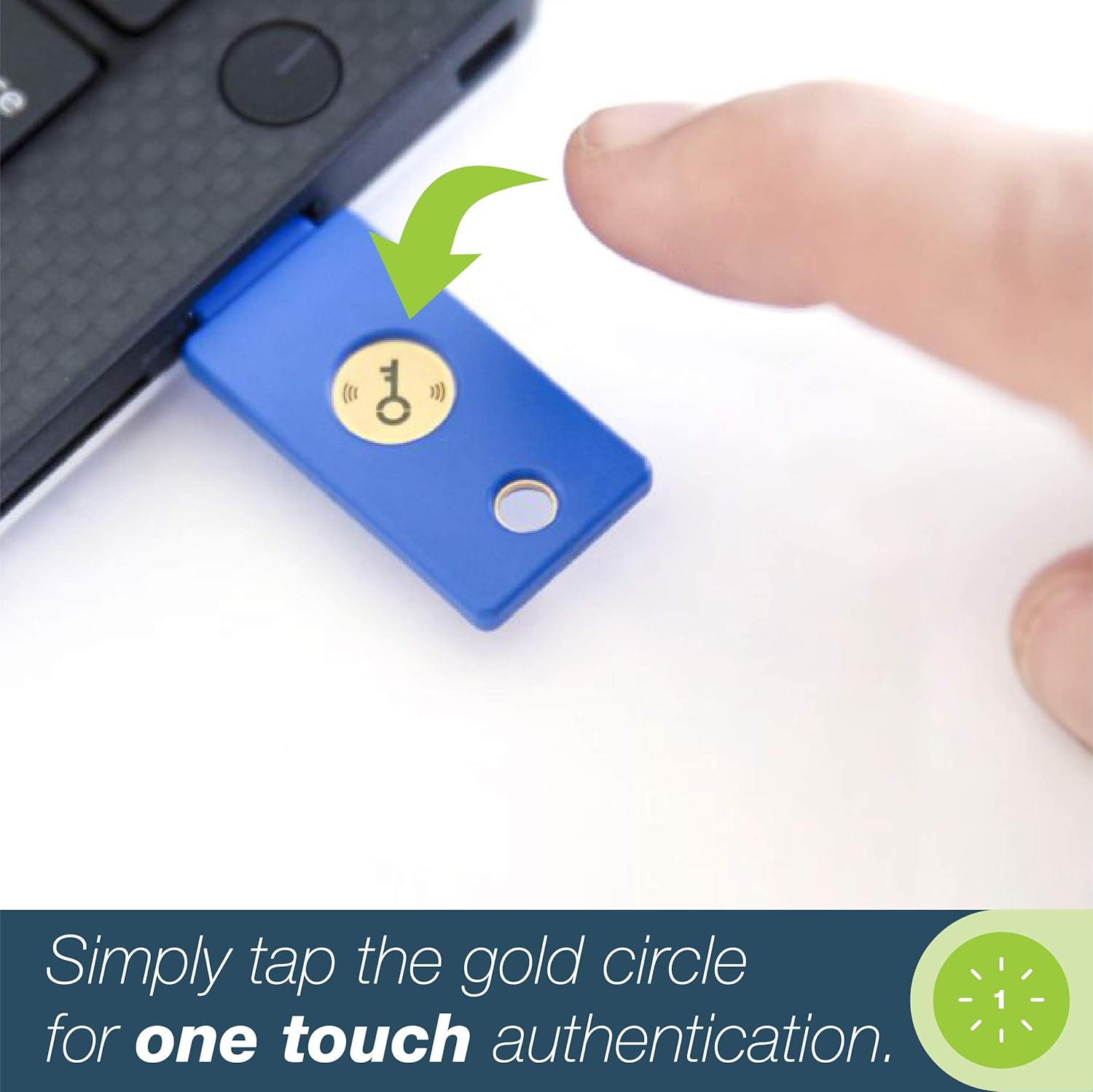
YubiKey 5 NFC — Hardware Security Key
View on Amazon ↗Your Seed Phrase is Your Wallet
Your seed phrase — 12 or 24 words generated when you create a wallet — is the master key to every coin in that wallet. Anyone who has these words controls your funds completely. Storing seed phrases digitally (screenshots, cloud storage, email drafts, notes apps) creates attack surfaces that are routinely exploited. Write your seed phrase on paper or stamp it into metal, store copies in separate physical locations, and never type it into any website or app unless you're restoring a wallet on a verified hardware device.
The Five Biggest Crypto Security Mistakes
1. Leaving Funds on Exchanges Long-Term
Exchanges are custodial — they hold your private keys, not you. History is full of collapses (Mt. Gox, FTX, Celsius) where users lost everything overnight. Use exchanges for trading, not storage.
2. Using SMS-Based 2FA
SIM-swap attacks let criminals port your number to their own SIM in minutes, intercepting every SMS code. Authenticator apps generate codes locally on your device with no carrier in the loop — always pick app-based 2FA where offered.
3. Reusing Passwords Across Crypto Accounts
More than 60% of account compromises start with credentials leaked from an unrelated breach. A unique, randomly generated password per account makes credential-stuffing attacks impossible.
4. Storing Seed Phrases Digitally
Screenshots, cloud notes, password managers, and email drafts are all routinely scraped by malware. Seed phrases belong on paper or stamped metal, stored in two physically separate locations.
5. Clicking Unverified Links
Phishing is the single biggest cause of self-custody losses. Bookmark every exchange and wallet URL, type addresses manually, and never approve a transaction you didn't initiate yourself.
How Hackers Target Crypto Users
Phishing Sites Mimicking Exchanges
Attackers buy lookalike domains and run Google Ads above the real exchange. The login form is pixel-perfect — and your credentials and 2FA code go straight to the attacker. Always verify the URL before logging in.
SIM Swapping
A social-engineered call to your carrier transfers your number to a new SIM. Once they own your number, SMS 2FA and password resets are theirs. Move your high-value accounts to authenticator-app or hardware-key 2FA.
Malicious Browser Extensions
Fake MetaMask clones and 'portfolio trackers' on the Chrome Web Store have stolen tens of millions in seed phrases. Install only from official wallet sites and audit every extension that has access to your browser.
Fake Hardware Wallet Websites
Counterfeit Ledger and Trezor sites ship pre-initialised devices with seed phrases the attacker already knows. Buy hardware wallets only direct from the manufacturer — never marketplaces, never resellers.
Social Engineering on Discord & Telegram
'Support staff' DM you minutes after you post a question, asking you to 'verify' your wallet. No legitimate project will ever DM first or ask for your seed phrase. Treat every unsolicited message as hostile.
Your Crypto Security Checklist
Key Takeaways
- Self-custody beats exchange custody. Move long-term holdings off exchanges to a hardware wallet you control.
- Your seed phrase is your wallet. Store it offline on paper or metal, never in cloud storage, screenshots, or notes apps.
- Ditch SMS 2FA. Use an authenticator app at minimum, and a hardware security key like YubiKey for high-value accounts.
- Use a password manager. Unique, long passwords on every exchange and email account prevent credential-stuffing attacks.
- Assume phishing is constant. Bookmark exchange URLs, verify wallet addresses character-by-character, and never sign transactions you don't understand.
- Protect your network. A reputable VPN on public Wi-Fi and an up-to-date device dramatically reduce your attack surface.
Frequently Asked Questions
Where should I store my cryptocurrency?+
For any holdings over a few hundred dollars, use a hardware wallet like Ledger or Trezor. Hardware wallets keep your private keys offline, isolated from internet-connected threats. Exchanges are convenient for trading but are custodial — if the exchange is hacked or collapses, your funds are at risk.
Is SMS-based 2FA safe for crypto exchanges?+
No. SMS 2FA is vulnerable to SIM-swap attacks, where an attacker convinces your phone carrier to transfer your number to their SIM. Use an authenticator app (Google Authenticator, Authy) or, for the strongest protection, a hardware security key like YubiKey.
How should I store my seed phrase?+
Write it on paper or stamp it into metal, and store copies in two physically separate locations. Never store a seed phrase digitally — no screenshots, cloud notes, password managers, or email drafts. Malware routinely scrapes all of these.
Do I really need a VPN to trade crypto?+
Yes if you use public WiFi or want to prevent your IP address being linked to your wallet activity. Public networks expose your traffic to man-in-the-middle attacks, and blockchain analytics firms routinely correlate IP addresses with on-chain activity.
What's the most common way crypto users get hacked?+
Phishing. Fake exchange and wallet sites mimic the real thing pixel-perfect, often promoted via Google Ads above the genuine result. Always bookmark exchange URLs, type them manually, and never click crypto-related links from emails or DMs.
Should I keep all my crypto in one wallet?+
No. Split large holdings across multiple wallets — a small 'hot' wallet for active trading and one or more cold-storage wallets for long-term holdings. This reduces single-point-of-failure risk if one wallet is compromised.
How often should I review my smart contract approvals?+
Quarterly at minimum. Use a tool like Revoke.cash to see which contracts have token-spending approval on your wallet, and revoke any you no longer use. Unlimited approvals to compromised contracts are a leading cause of self-custody losses.