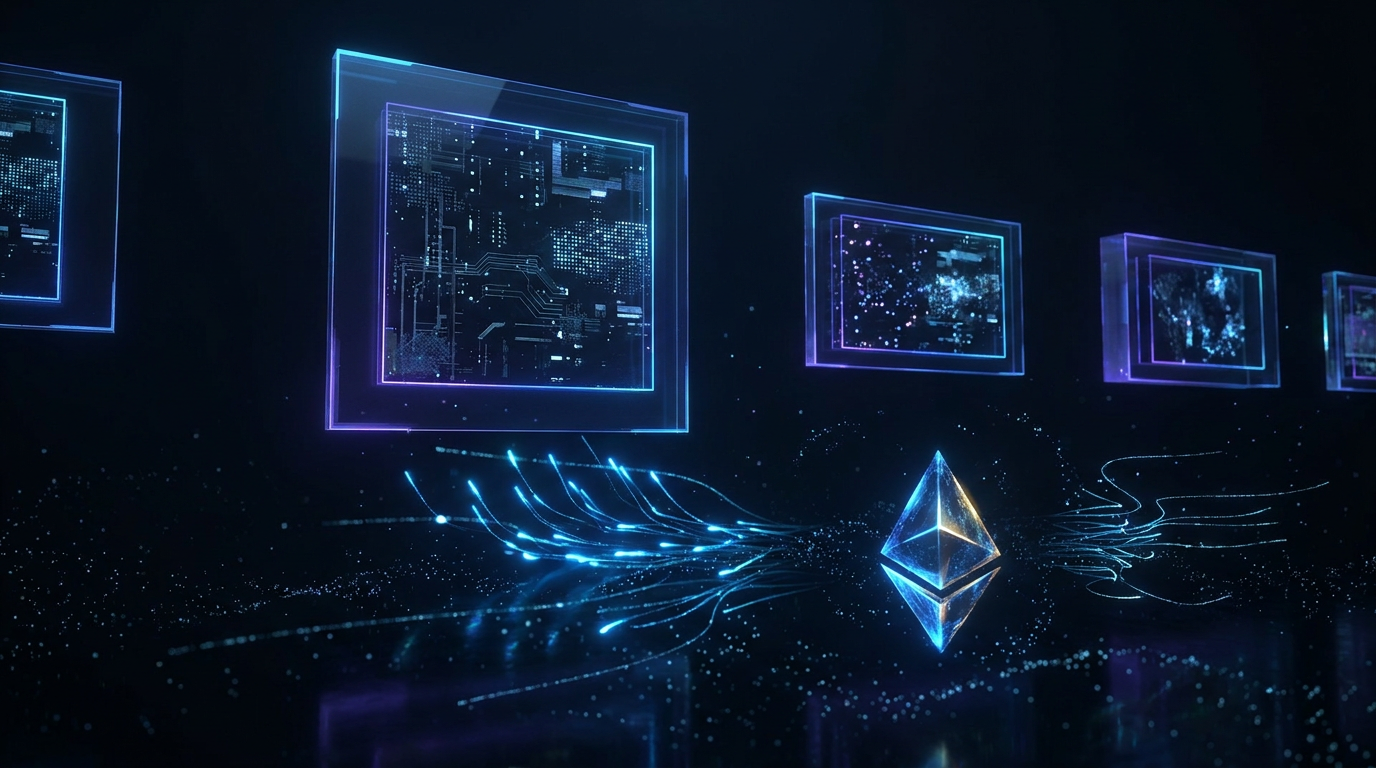
NFT Royalties Route a Share of Sales Back to Creators
This article was produced with AI assistance and reviewed for accuracy.
Content is for informational purposes only and does not constitute financial advice.
NFT royalties are programmable payment rules embedded directly into smart contracts, automatically routing a percentage of every secondary sale back to the original creator — without requiring the creator to take any action, file any claim, or trust any intermediary. This mechanism, most commonly set between 2.5% and 10% of the sale price, represents one of the most structurally significant innovations the NFT space introduced to digital commerce. Understanding how royalties work — and why they became so fiercely contested — matters for anyone participating in Web3 culture, whether as a collector, creator, or trader.
How NFT Royalties Are Programmed and Enforced
When a creator mints an NFT on a smart contract platform such as Ethereum, they can specify royalty terms directly in the contract code. The most widely adopted standard for this on Ethereum is ERC-2981, a royalty information standard that allows marketplaces to query a contract and determine what percentage of a sale should be returned to the creator address. The royalty logic does not live on the marketplace — it lives on the blockchain itself, which is why creators initially believed these payments were permanent and tamper-proof.
For broader market context, see Bubblepedia historical bubble analysis.
In practice, royalty enforcement has always depended on marketplace cooperation. When a buyer purchases an NFT on a platform like OpenSea or Blur, the marketplace reads the contract's royalty specification and, if it chooses to, deducts the creator's cut before settling payment to the seller. The blockchain itself cannot force a sale to include royalty payment — it can only record that a royalty should be paid. This distinction became the center of a major industry conflict from 2022 onward, when competing marketplaces began offering optional or zero-royalty trading to attract volume, forcing creators to confront the limits of on-chain enforcement.
For deeper technical context on how NFT smart contracts are structured, see our guide on NFTs Explained, which covers the underlying token standards and metadata architecture that make royalty logic possible.
Why Royalties Matter for Creators and Community Culture
For digital artists and independent creators, royalties represented a genuine structural breakthrough. Before NFTs, a digital artist who sold a JPEG for $50 received $50 once — regardless of how many times that work was later resold, reproduced, or licensed. An NFT royalty changes that equation entirely. If a piece sells for $500 and is later resold for $5,000, a 10% royalty clause routes $500 back to the creator automatically. Over a collection of thousands of items with active secondary trading, royalty income can dwarf primary sale revenue.
This matters beyond individual artists. Many NFT collection founders set royalty rates and direct those funds back into the project treasury — financing development, community events, token buybacks, or holder rewards. The royalty stream, in these cases, is effectively the project's operating revenue. Collections that lose royalty enforcement lose their funding model. This is why the royalty debate is not simply an ethical one about creator rights; it is a structural debate about how Web3 communities sustain themselves over time.
Meme coin communities, which often overlap with NFT collector culture, have also explored royalty-adjacent mechanics. Some projects pair NFT collections with fungible meme tokens, using NFT royalty income to fund token buybacks or liquidity pools. The result is a feedback loop between collector activity and token price that makes community engagement a direct economic variable. For more on how that intersection works, see Meme Coins Explained.
The Royalty Wars: Marketplaces, Creators, and the Enforcement Gap
The central tension in NFT royalties is that smart contracts can encode intent but cannot enforce payment without marketplace cooperation. From 2022 to 2023, a wave of competing NFT platforms — most notably Blur, which launched in October 2022 and rapidly captured market share from OpenSea — made creator royalties optional for traders. The logic from a trader's perspective was straightforward: lower transaction costs improve returns. From a creator's perspective, the move gutted the business model they had been promised.
OpenSea responded by initially requiring royalty enforcement for new collections, then walking back that policy under competitive pressure. The episode exposed a structural flaw: the NFT ecosystem had grown dependent on voluntary marketplace compliance rather than protocol-level enforcement. Several technical proposals emerged to address this, including operator filter registries that allow contracts to block royalty-skipping marketplaces from trading the collection. These filters add friction, however, and the tradeoff between liquidity and creator revenue has not been cleanly resolved by any single standard.
Royalty compliance rates across major marketplaces have varied significantly based on collection age, contract type, and platform policy changes. Collections minted before ERC-2981 standardization often have weaker on-chain royalty specification, making enforcement even harder. Newer collections increasingly deploy custom enforcement logic, but this adds complexity and can make collections harder to trade on smaller platforms.
What to Watch as Royalty Standards Evolve
Several developments are worth tracking for anyone involved in NFT creation or collecting. First, the push for protocol-level royalty enforcement at the blockchain layer — rather than marketplace layer — continues to develop. Projects building on newer chains, including Solana's Metaplex standard, have experimented with programmable royalty enforcement that restricts transfers unless the royalty is paid on-chain, though these approaches face their own tradeoffs around composability.
Second, the relationship between Fear and Greed sentiment and secondary market volume has a direct royalty implication: when the market contracts (as reflected in the current Fear and Greed Index reading of 28), secondary trading volume drops sharply, and royalty income for creators falls with it. Bull market conditions are when royalty flows are highest, meaning creators are most exposed to royalty policy changes precisely when the market is most attractive for traders to bypass them.
Third, the broader question of creator monetization in Web3 is increasingly central to how communities form and sustain themselves. Royalties are one mechanism; token-gated communities, direct licensing, and airdrop-based incentive structures are others. The collections and communities that survive bear markets tend to be those that build revenue diversity rather than depending entirely on secondary royalty flows. For broader market cycle context, see WealthWatchPro investment intelligence.
NFT Royalties as a Creator Infrastructure Question
NFT royalties are not simply a feature — they are a statement about what kind of internet Web3 intends to build. The mechanism works best when marketplaces, creators, and collectors share aligned incentives: creators produce work that appreciates in value, collectors benefit from that appreciation, and a portion of that value recirculates back to sustain continued creation. Where that alignment breaks down, enforcement debates follow. Creators entering the NFT space in 2026 should treat royalty enforcement as a due-diligence item — examining which platforms honor their contract's royalty specification and structuring collections with enforcement-compatible standards from the outset, rather than assuming the smart contract alone protects their income.
Frequently Asked Questions
What percentage do NFT creators typically charge in royalties?+
Most NFT creators set royalty rates between 2.5% and 10% of the secondary sale price. The exact rate is encoded in the smart contract at the time of minting and can vary by collection and platform.
Can NFT royalties be bypassed?+
Yes. Because blockchain smart contracts cannot force a marketplace to honor royalty payments, platforms that choose not to enforce them can facilitate royalty-free trades. This became a major issue when competing marketplaces made creator royalties optional to attract higher trading volume.
What is ERC-2981?+
ERC-2981 is an Ethereum token standard that allows NFT smart contracts to specify royalty information in a standardized way, enabling marketplaces to query the contract and apply the correct creator payment during a sale.
Do NFT royalties apply to the first sale or only secondary sales?+
Royalties apply to secondary sales — resales between collectors after the original mint. The primary sale revenue goes directly to the creator or the project, while royalties are the mechanism that generates ongoing income from subsequent trading activity.
Are NFT royalties taxable?+
In most jurisdictions, royalty income received by an NFT creator from secondary sales is treated as ordinary income for tax purposes, though rules vary by country. Collectors and traders should consult a qualified tax professional for their specific situation.
Sources & Further Reading

Get CoinHours in your inbox
Crypto markets, cycles and on-chain signals in your inbox.