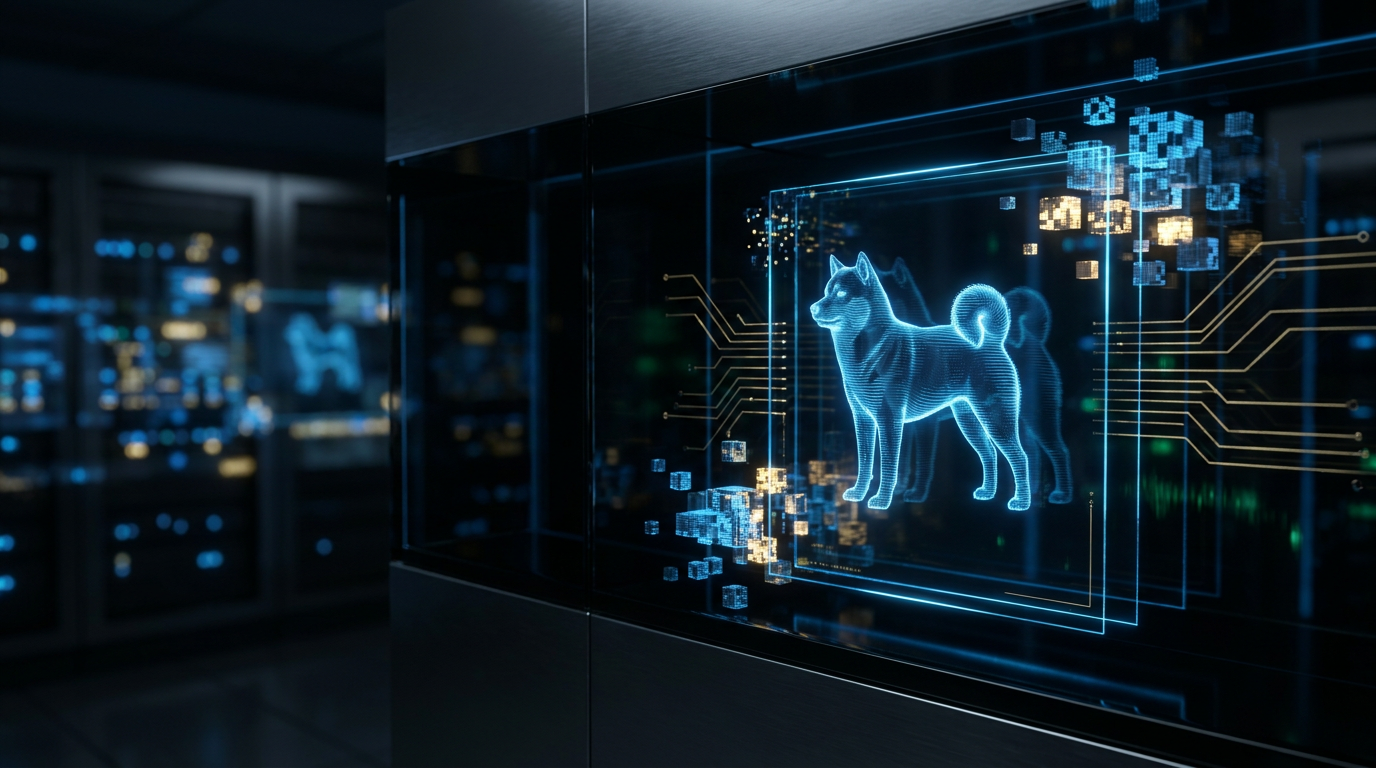
Dogecoin Began as a 2013 Joke and Grew Into a Real Blockchain
This article was produced with AI assistance and reviewed for accuracy.
Content is for informational purposes only and does not constitute financial advice.
Dogecoin launched on December 8, 2013, created by software engineers Billy Markus and Jackson Palmer as a deliberate parody of the speculative fever gripping crypto markets — yet within two weeks it had amassed a larger online community than Bitcoin itself. What began as a joke built on the Shiba Inu "Doge" meme evolved into a fully functional, self-sustaining blockchain that today underpins one of the most resilient digital asset communities in the industry, including the growing Doginals ecosystem built natively on its chain.
The Technical Architecture Behind the Meme
Dogecoin is a Proof-of-Work blockchain forked from Litecoin — which was itself a fork of Bitcoin — making it part of a clear technical lineage. The key difference from Bitcoin lies in its hashing algorithm: where Bitcoin uses SHA-256, Dogecoin uses Scrypt. Scrypt was originally designed to be memory-intensive, making it harder to dominate with specialised mining hardware (ASICs). In practice, ASICs for Scrypt were eventually developed, but the algorithm still results in a meaningfully different mining dynamic compared to Bitcoin's SHA-256 network.
Block time is another defining characteristic. Dogecoin confirms a new block approximately every one minute, compared to Bitcoin's ten-minute target. This makes Dogecoin significantly faster for on-chain settlement, a feature that has made it practical for small transactions, tipping, and micropayments without the friction of longer confirmation waits. Litecoin sits at roughly 2.5 minutes, so Dogecoin undercuts even its parent chain on this metric.
Perhaps the most structurally significant technical difference from Bitcoin is Dogecoin's supply schedule. Bitcoin is famously capped at 21 million coins. Dogecoin has no hard cap. After an initial mining phase that included a randomised block reward (an unusual design choice later removed), the protocol settled on a fixed annual issuance of 5.28 billion DOGE per year. This inflationary model was a deliberate choice by Markus and Palmer to prevent hoarding and encourage spending — a fundamentally different monetary philosophy from Bitcoin's deflationary design.
Merge Mining and the Litecoin Relationship
One of the most consequential technical decisions in Dogecoin's history came in 2014, when the network adopted merged mining with Litecoin. Merged mining — formally called Auxiliary Proof of Work (AuxPoW) — allows miners to submit work done on the Litecoin chain simultaneously as valid proof of work on the Dogecoin chain. This means Dogecoin benefits from Litecoin's much larger hash rate without Litecoin miners needing to do any additional computational work.
Before merged mining was activated, Dogecoin faced a genuine security concern: its hash rate was low enough that a 51% attack — where a single entity controls the majority of mining power to manipulate the chain — was a realistic threat. Merged mining resolved this by tethering Dogecoin's security to Litecoin's far more substantial mining ecosystem. It was a pragmatic engineering fix that ensured the network's survival, and the model has held for over a decade.
For deeper context on how to access Dogecoin and the broader crypto ecosystem, CoinHours provides a detailed comparison at Coinbase vs Binance for Australians — Which Exchange is Better in 2026? — which covers fee structures, regulatory compliance, and tax reporting tools relevant to DOGE holders trading on major platforms.
The Doginals Layer and On-Chain Community
Dogecoin's technical properties — fast block times, Scrypt hashing, and merged mining security — created an unexpectedly solid foundation for the emergence of Doginals, an inscription-based protocol analogous to Bitcoin Ordinals. Doginals allow data, images, and metadata to be inscribed directly onto individual DOGE satoshis (called koinus or shibes in community parlance), creating non-fungible assets that live natively on the Dogecoin chain without any separate smart contract layer.
The Doginal Dogs collection is the flagship expression of this ecosystem. Unlike NFT collections on Ethereum or Solana, Doginal Dogs are inscribed directly on-chain onto the Dogecoin blockchain, meaning their provenance and ownership records are secured by the same merged-mining hash rate that protects DOGE transactions. This is a meaningful distinction: the collectible and the settlement layer are one and the same chain, with no bridging, wrapping, or third-party custody required.
For investors and community members interested in the broader NFT space and how on-chain inscriptions compare to smart-contract-based token standards, see our explainer at How to Buy Crypto in Australia — A Complete Beginner's Guide for 2026, which covers wallet setup and on-ramp options relevant to entering the Doginals ecosystem.
The Fear and Greed Index sitting at 73 (Greed) reflects a market environment that has historically drawn attention to community-driven assets like DOGE — though that reading alone is not a signal for any specific position.
What the Doginals Community Should Watch
Dogecoin's technical roadmap, while less publicised than Ethereum's or Solana's, does include ongoing developer discussion around additional scripting capabilities that could expand what Doginals can do natively on-chain. Any increase in base-layer functionality would directly benefit the expressiveness of inscribed assets, including collections like Doginal Dogs. The merged-mining relationship with Litecoin also means that developments in Litecoin's hash rate environment have downstream implications for Dogecoin's security — a dynamic worth monitoring as both networks age.
Community health in the Doginals space is ultimately tied to on-chain activity: the volume of new inscriptions, wallet addresses holding Doginal Dogs, and the liquidity available on Dogecoin-native marketplaces are the ground-truth metrics that reflect real engagement. With no live marketplace data available at the time of writing, participants should consult the official Doginal Dogs marketplace directly for current floor prices and collection statistics before drawing conclusions about valuation or demand.
For broader investment context alongside the Dogecoin and Doginals ecosystem, the team at Australian Property Forum publishes wealth context relevant to diversified digital asset holders navigating multiple asset classes.
Frequently Asked Questions
Who created Dogecoin and why?+
Dogecoin was created by Billy Markus and Jackson Palmer and launched on December 8, 2013. It was designed as a parody of speculative crypto culture, inspired by the popular Shiba Inu 'Doge' internet meme.
What hashing algorithm does Dogecoin use?+
Dogecoin uses the Scrypt hashing algorithm, inherited from its Litecoin fork ancestry. This differs from Bitcoin's SHA-256 algorithm and results in a different mining hardware and energy dynamic.
Does Dogecoin have a maximum supply cap?+
No. Dogecoin has no hard supply cap. After its initial mining phase, the protocol settled on a fixed annual issuance of 5.28 billion DOGE, making it an inflationary asset by design — unlike Bitcoin's 21 million coin limit.
What is merged mining and how does it protect Dogecoin?+
Merged mining (Auxiliary Proof of Work) allows Litecoin miners to simultaneously validate Dogecoin blocks at no extra computational cost. Adopted in 2014, it dramatically increased Dogecoin's hash rate and reduced the risk of a 51% attack.
What are Doginals and how do they relate to Dogecoin's blockchain?+
Doginals are inscriptions written directly onto individual units of Dogecoin, similar to Bitcoin Ordinals. They require no separate smart contract layer — the data lives natively on the Dogecoin base layer, secured by the same merged-mining hash rate that protects all DOGE transactions.

Get CoinHours in your inbox
Crypto markets, cycles and on-chain signals in your inbox.