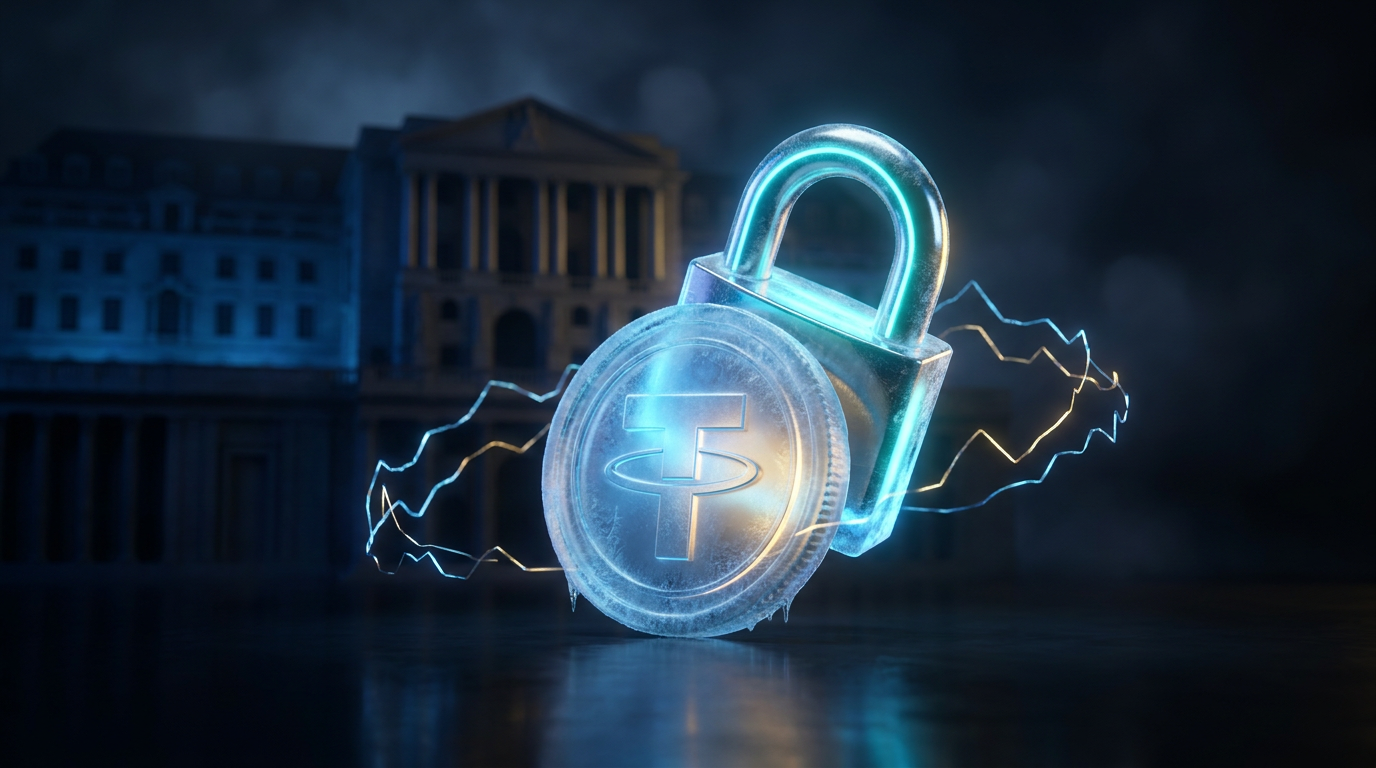
Binance Hack's $2.85B Freeze Fuels UK Stablecoin Rule Push
This article was produced with AI assistance and reviewed for accuracy.
Content is for informational purposes only and does not constitute financial advice.
A Cointelegraph opinion piece published Monday argues that the successful freezing of $2.85 billion from the record Binance hack should push the United Kingdom to make clear stablecoin freeze obligations a condition of listing on UK platforms. 3 billion.
Event: How the freeze happened
According to the Cointelegraph piece, the hackers understood from the outset that they had a limited window to move the stablecoins before issuers could intervene. Less than an hour after the hack began, they sold $325 million worth of stolen USDT for Ether, a deliberate attempt to swap an asset that could be frozen for one that could not. The strategy only partially worked. Tether's first major freeze came just 37 minutes after the stolen funds reached the hackers' main wallet, and Circle followed three minutes later, blocking the movement of USDC, per the source article, which cites data visualized by Elliptic and CertiK. Pratt writes that without this intervention, "far more of the funds could have ended up beyond their reach."
The episode has already generated legal friction around freeze practices. The article notes that Circle is facing a proposed class action from Drift Protocol investors who allege the firm failed to freeze around $230 million in stolen USDC after an April hack, with investors arguing Circle could have stopped the funds but didn't act in time. Tether is being sued in New York by two businessmen who claim it froze millions of their assets months before a seizure warrant existed; Tether has responded by calling the allegations baseless, according to the source.
Implications: A regulatory gap in the UK
Pratt's central argument is that stablecoin issuers now wield a freeze power comparable to that of traditional banks, but without the same legal scaffolding. "Banks don't get to decide they want to freeze assets out of nowhere," she writes, noting that bank freezes typically follow a legal trigger and carry a route for challenge. Stablecoin issuers, by contrast, "have to act faster and across borders," and the article contends it is "about time they're given some structure."
The piece acknowledges a jurisdictional limit: Tether and Circle are not based in the UK, so British regulators cannot directly compel their behavior. What UK authorities can control, Pratt argues, is which stablecoins domestic customers are permitted to buy. The article points to the Financial Conduct Authority's cryptoassets regime, published in June, under which UK trading platforms must conduct due diligence and publish a disclosure document before listing a coin — including stablecoins issued overseas — with that regime coming into force on 25 October 2027. The Bank of England is separately finalizing its Code of Practice for systemic stablecoin issuers by the end of this year, covering stablecoins used widely enough for payments to matter to UK financial stability. Per the source, neither framework currently establishes clear obligations around freezing stolen funds.
Pratt's proposed fix involves two conditions issuers would need to agree to before a stablecoin could be sold on a UK platform: first, that the issuer is contactable and ready to act regardless of whether the victim is a major exchange or a small UK platform; and second, that there is a clear timetable for what happens after a freeze, including same-day notification to the National Crime Agency and an expiry of the freeze absent a court order to keep the wallet frozen.
CoinHours analysis: Reading the freeze against current market sentiment
CoinHours' own cached Fear & Greed Index reading (saved 2026-11-09T15:17:18.416+00:00), sourced from Alternative. And saved as of November 9, 2026 at 15:17:18 UTC, shows the index at a value of 29, classified as "Fear." That reading does not establish causation with the Binance hack or the stablecoin freeze debate described in the Cointelegraph piece, and the source article does not link sentiment data to the freeze outcome. But as general market-context analysis, a Fear-zone reading alongside continued scrutiny of exchange security and stablecoin issuer powers is consistent with a market still digesting large-scale custody and counterparty risk — the same risk category this freeze debate addresses. The $2.85 billion frozen, as a proportion of the reported $6.3 billion total heist cited in the source, underscores why Pratt frames centralized issuer control as a meaningful backstop even for crypto purists skeptical of centralization generally.
The regulatory timing matters here too. With the FCA's disclosure regime not taking effect until 25 October 2027 and the Bank of England's Code of Practice for systemic issuers still being finalized, there is a multi-year window during which, per the source, no UK framework explicitly requires freeze-readiness or sets a legal timetable for notifying law enforcement. That gap is precisely what Pratt's op-ed is attempting to close before it becomes entrenched in rulebooks that are, in her words, harder to "retrofit" later.
What comes next
Two threads will determine whether this debate translates into firm UK policy. First, whether the Bank of England's forthcoming Code of Practice for systemic stablecoin issuers, due by the end of this year according to the source, incorporates any freeze-timetable language. Second, whether the FCA's cryptoassets disclosure regime, set to take effect on 25 October 2027, is interpreted to require freeze-contactability commitments from overseas issuers as part of the due-diligence and disclosure obligations already mandated for UK trading platforms. The pending litigation involving Circle and the Drift Protocol investors, as well as the New York case against Tether described in the source, may also shape how issuers publicly define their freeze criteria going forward, since both disputes center on the timing and legal basis for freeze decisions rather than on whether issuers have the technical capability to freeze funds at all.
For now, the Binance case stands as the clearest public demonstration that stablecoin freezes can materially blunt a hack of this scale, with 94% of the $2.85 billion frozen sum held in stablecoins, per the source. Whether that capability becomes a formalized listing requirement in the UK, rather than an ad hoc response dependent on an issuer's goodwill and the profile of the victim, is the open question Pratt's piece puts squarely to regulators.
Further reading: For background on how stablecoins function and where issuer control fits into the broader picture, see CoinHours' Stablecoins Deep Dive — USDT, USDC, and the Collapse of UST and How Crypto Exchanges Work.
Further reading / context
Frequently Asked Questions
How quickly did stablecoin issuers freeze assets from the Binance hack?+
Tether froze stolen USDT 37 minutes after funds reached hackers' main wallet; Circle blocked USDC three minutes later. Hackers attempted to swap $325M USDT for Ether within the first hour to avoid freezing.
Why does UK regulation currently lack freeze requirements for stablecoins?+
The FCA's cryptoassets disclosure regime doesn't take effect until October 25, 2027, and the Bank of England's Code of Practice for systemic issuers is still being finalized. Neither existing framework explicitly requires freeze-readiness obligations.
What legal challenges exist around stablecoin freeze practices?+
Circle faces a class action from Drift Protocol investors alleging it failed to freeze ~$230M stolen USDC after an April hack. Tether is sued by two businessmen claiming it froze millions of their assets months before a seizure warrant existed; Tether calls allegations baseless.
What structural difference exists between bank freezes and stablecoin issuer freezes?+
Per Pratt, banks freeze assets only after legal triggers and provide challenge routes, while stablecoin issuers must act faster across borders without equivalent legal scaffolding. Issuers currently wield freeze power comparable to banks but without the same regulatory structure.
Sources & Further Reading

Get CoinHours in your inbox
Crypto markets, cycles and on-chain signals in your inbox.