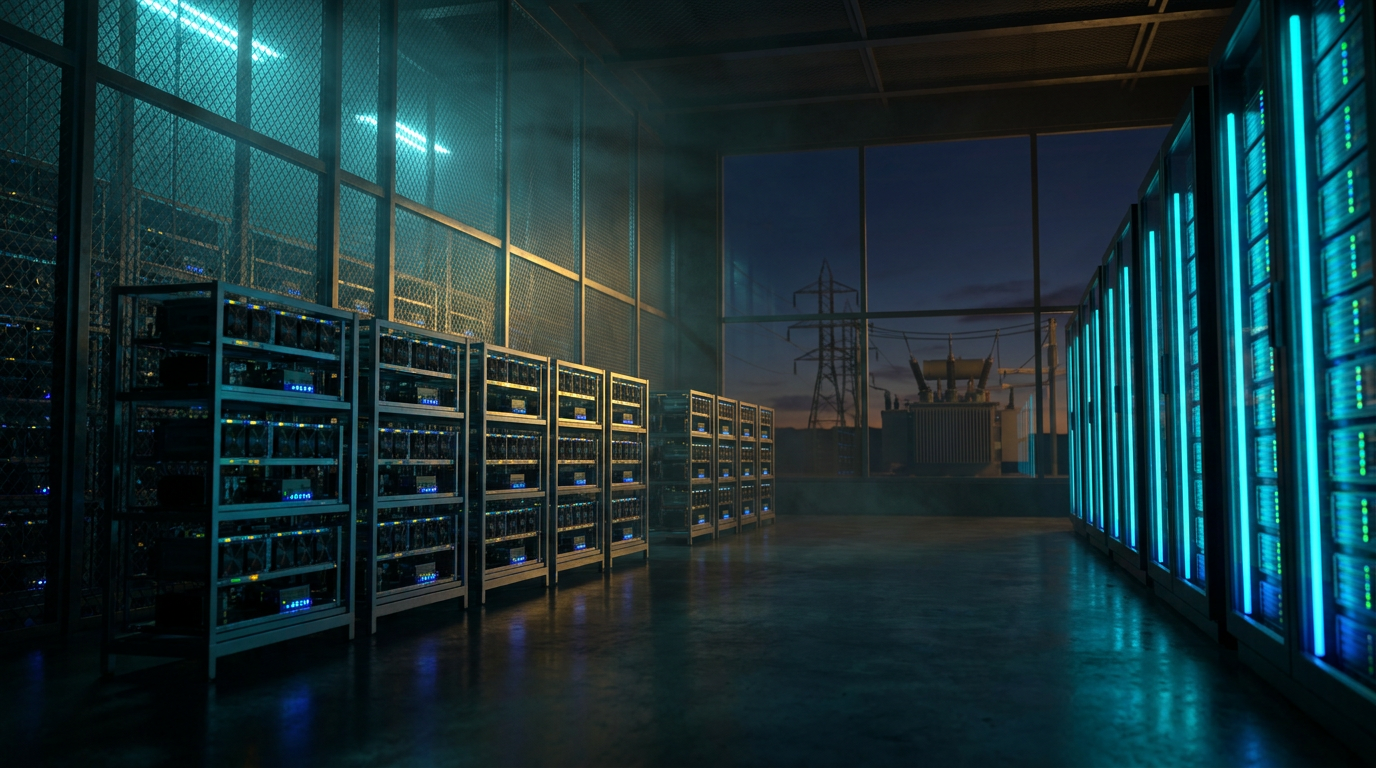
US Voters' Data Center Curbs May Favor Bitcoin Miners Over AI
This article was produced with AI assistance and reviewed for accuracy.
Content is for informational purposes only and does not constitute financial advice.
Bitcoin miners that already hold secured electricity contracts and physical infrastructure could gain a competitive edge in the build-out of artificial intelligence data centers after voters in several US communities backed new restrictions on data center development during the Nov. 3 midterm elections, according to industry experts who spoke to Cointelegraph. The result, which saw local measures appear on the same ballots as congressional races, has sharpened the case for Bitcoin miners already expanding into AI hosting to accelerate that transition rather than wait for new sites to clear increasingly hostile local approval processes.
Event: Voters Back Restrictions in 40 of 41 Tracked Contests
According to Cointelegraph, voters favored limiting data center development in 40 of the 41 local contests tracked by Ballotpedia during the midterms. The restrictions varied by jurisdiction and included citywide bans, limits on the size of new facilities, temporary pauses on new projects, and requirements for voter approval before some developments can proceed. Cointelegraph reported that last week, voters backed 27 measures to limit or oppose new data centers, including five complete bans, 12 partial bans, and six-month pauses on new projects in three Maine towns. In Grove City, Ohio, voters approved a rule requiring public approval for large projects that use more than 20 megawatts of electricity, among other conditions, Cointelegraph said.
The driving concerns cited by Cointelegraph include rising electricity costs, water use, and the broader impact on nearby communities — issues that have become more visible as AI-related data center construction accelerates across the country. Because local authorities typically oversee zoning, building permits, and in many cases access to electricity, these decisions can carry more immediate weight than federal policy on whether a given project actually gets built, the outlet reported.
Jamie Brown, CEO of Global Kiwi Labs, told Cointelegraph that the shift makes repurposing existing Bitcoin mining infrastructure for AI more attractive. "If a Bitcoin miner has not yet repurposed their electric contract and physical plant to AI, the case to do so just got more compelling," Brown said. Jordan Knecht, head of strategic integrations at blockchain infrastructure company Kresus, echoed that local conditions may now matter as much as federal policy. "A company might have access to an attractive site and a significant amount of power capacity, but if local restrictions prevent it from expanding or upgrading that infrastructure, the opportunity becomes much more difficult to pursue," Knecht told Cointelegraph.
Implications: Cost Gap and Power Profile Differences
Cointelegraph reported that publicly listed Bitcoin miners announced more than $70 billion in AI and advanced computing contracts during 2025 and early 2026, according to a first-quarter report by CoinShares. That scale of commitment underscores why existing miner sites — many already connected to substantial power capacity — are seen as a starting advantage rather than a finished product. Building AI-ready data center infrastructure can cost between $8 million and $15 million per megawatt, compared with $700,000 to $1 million per megawatt for traditional mining facilities, according to a 2026 report by CoinShares cited by Cointelegraph. Knecht told Cointelegraph that "transitioning from Bitcoin mining to AI workloads requires significant additional investment in infrastructure for cooling, networking, and reliability."
Yuliya Barabash, founder of SBSB Fintech Lawyers, told Cointelegraph that electricity demand profiles differ meaningfully between the two uses. Bitcoin miners can often reduce electricity consumption when prices rise, while AI data centers typically require a consistent, uninterrupted power supply, she said. "Higher electricity prices and additional regulatory requirements could make some projects less profitable or delay their implementation," Barabash said. That distinction matters because a miner converting a site to AI hosting takes on a different risk profile: it can no longer flex power draw downward during price spikes the way it could when mining Bitcoin.
Cointelegraph noted that US data center electricity demand is expected to keep climbing regardless of the local pushback. The International Energy Agency estimates that data centers used 224 terawatt-hours of electricity in 2025, a figure the agency projects will nearly double to 426 terawatt-hours by 2030. That trajectory suggests the underlying demand for computing capacity is not disappearing even as individual communities slow specific projects — it may simply concentrate more of that demand onto sites, like existing miner facilities, that already have power secured and permits in place.
What Comes to Congress: Grid Costs Under Scrutiny
Cointelegraph reported that the incoming Democratic-controlled Congress is expected to examine more closely who pays for the grid upgrades large data center facilities require. Knecht told Cointelegraph that lawmakers could take a closer look at how these projects affect electricity costs and how they get approved, adding: "There may be more pressure to ensure that large data center operators are paying their fair share of infrastructure costs rather than passing those expenses on to consumers." Barabash offered a similar view, telling Cointelegraph that "one of the key priorities is likely to be ensuring that technology companies, rather than ordinary consumers, bear the costs of the additional electricity infrastructure their facilities require."
Despite the prospect of tighter scrutiny, experts cited by Cointelegraph were clear that closer federal attention does not necessarily translate into less support for the sector overall. Knecht said "AI infrastructure is becoming increasingly important to the US economy, and there is still a strong incentive to support investment in domestic computing capacity." For miners weighing whether to convert mining sites, Cointelegraph framed the central question as whether AI hosting revenue can justify the capital outlay for upgraded cooling, networking, and power systems. Brown was unequivocal on that point, telling Cointelegraph: "Miners will swap to AI because it is a better ROI than mining."
CoinHours analysis
This local-regulation story lands against a broader bitcoin backdrop that CoinHours tracks through its own cached market indicators. As of CoinHours' cycle_indicators snapshot taken 2026-11-11T20:45:03 UTC, bitcoin dominance stood at 60.46%, bitcoin traded at $74,384.15, and the composite cycle score read 43, classified "Mid Bull," with bitcoin sitting 82.45% of the way to its all-time high of $124,658.54 recorded on 2025-10-06. The same CoinHours cycle_indicators snapshot (saved 2026-11-11T00:17:24.156+00:00) shows bitcoin 64.9% of the way through the current halving cycle, with 506 days until the next halving. CoinHours' cached fear_greed reading from 2026-11-11T00:17:24 UTC placed sentiment at 29, classified "Fear," per provider Alternative.me. None of these cached figures establish causation with the midterm zoning votes Cointelegraph reported; they are offered only as CoinHours' own timestamped context on where bitcoin's broader market cycle and sentiment stood around the same period that voters in several states imposed new data center restrictions. Miner economics — the capital intensity of switching sites to AI hosting versus continuing to mine — sit somewhat apart from short-term price sentiment, since the decision to convert, as Knecht and Brown described it to Cointelegraph, hinges more on long-run ROI comparisons than on daily fear-and-greed swings.
What to Watch
The practical test ahead will be whether more Bitcoin miners formally announce site conversions citing the local permitting environment Cointelegraph described, and whether the incoming Congress moves on the grid-cost-allocation questions that Knecht and Barabash flagged. Investors and operators will also be watching whether additional local ballot measures follow the pattern seen in the 41 contests Ballotpedia tracked, potentially reinforcing the advantage held by miners with power and permits already secured.
Further reading: Bitcoin Dominance Explained and How Crypto Exchanges Work for background on broader crypto market structure.
Further reading / context
Frequently Asked Questions
Why do Bitcoin miners have an advantage converting to AI hosting after these voting results?+
Miners with existing secured electricity contracts and physical infrastructure avoid local permitting obstacles now facing new data center projects. As one expert stated, "if a Bitcoin miner has not yet repurposed their electric contract and physical plant to AI, the case to do so just got more compelling."
What specific local restrictions did voters approve on data centers?+
Measures included citywide bans, size limits on new facilities, temporary pauses on projects, and voter approval requirements. For example, Grove City, Ohio voters approved a rule requiring public approval for projects using over 20 megawatts of electricity.
What infrastructure investments are required to convert Bitcoin mining sites to AI hosting?+
Conversions require significant additional investment in cooling, networking, and reliability systems beyond the base power capacity already available at mining sites.
Why do community concerns about data centers matter more than federal policy?+
Local authorities control zoning, building permits, and electricity access, giving their decisions more immediate weight on project feasibility than federal policy decisions.
What is Congress expected to focus on regarding data center development?+
The incoming Congress is expected to examine who pays for grid upgrades, with potential pressure on large data center operators to bear infrastructure costs rather than passing them to consumers.
Sources & Further Reading


Get CoinHours in your inbox
Crypto markets, cycles and on-chain signals in your inbox.