Fed Chair Warsh Convenes AI-Inflation Forum Monday
This article was produced with AI assistance and reviewed for accuracy.
Content is for informational purposes only and does not constitute financial advice.
Federal Reserve Chair Kevin Warsh will convene a public forum on Monday, November 16, in San Francisco to examine whether artificial intelligence will bring down inflation, drive prices higher, or replace American workers, according to Decrypt. The conference will bring together technology executives, economists, and employers to examine how AI is reshaping the economy, and its findings could influence how the Fed approaches interest rates — a major factor in Bitcoin's price movements as investors weigh whether to put money into risky assets or safer alternatives, Decrypt reported.
Event: A Forum Born From a Policy Split
According to Decrypt, Warsh has argued that AI could help companies produce more goods and services at lower costs, easing inflation without requiring the Fed to keep borrowing expensive. But some of his colleagues see a different problem: the AI boom is already making things more expensive, while the promised productivity benefits remain largely theoretical, Decrypt noted. Fed Governor Lisa Cook warned in September that AI investment was adding inflationary pressure and delaying the central bank's return to its 2% inflation target, per the report. Building data centers requires enormous quantities of electricity, computer chips, construction materials, and skilled workers, and when technology companies compete for those limited resources, prices rise, Decrypt explained.
Warsh himself acknowledged in August that AI represents "a new variable" for monetary policy, according to Decrypt. Monday's conference will not determine the Fed's next interest-rate decision, scheduled for December 9, but it could offer clues about how policymakers view a technology boom that is increasingly influencing both Wall Street and the crypto market, the outlet reported. Fed Governor Michael Barr also warned Thursday of possible "serious short-term disruptions" as businesses increasingly replace human tasks with AI systems, per Decrypt — a labor-market concern running alongside the inflation question.
Implications: Rates, Risk Appetite, and Bitcoin's Direct AI Exposure
The mechanism Decrypt lays out is straightforward: if AI eventually allows businesses to produce more without raising costs, inflation could cool, giving policymakers room to lower interest rates. Lower rates generally make risky assets like Bitcoin or tech stocks more attractive because government bonds and savings accounts offer smaller returns, encouraging investors to seek higher gains elsewhere, per the report. But if AI spending keeps inflation elevated, the Fed could maintain high interest rates or raise them further — that would make borrowing more expensive, strengthen the appeal of interest-bearing assets, and potentially drain money from speculative investments, including cryptocurrencies, Decrypt wrote.
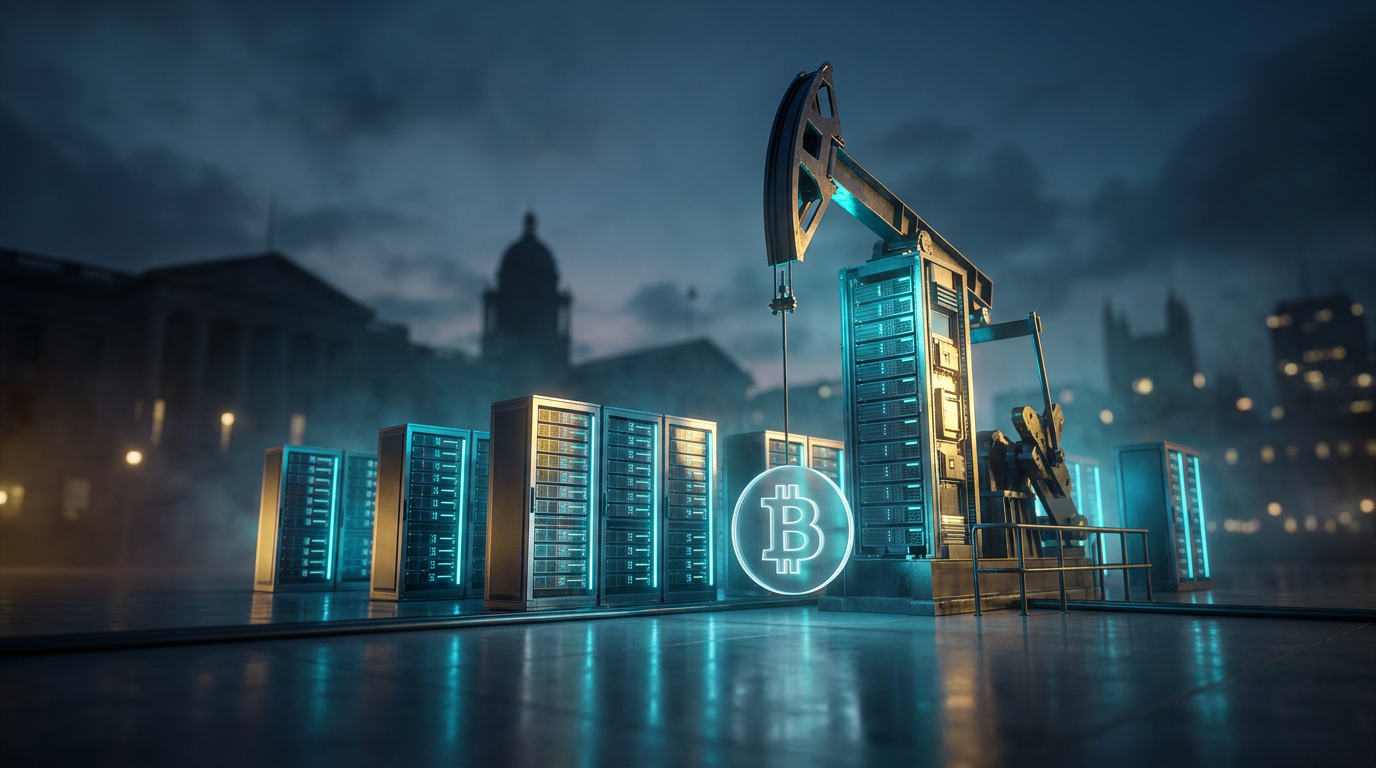
Decrypt reported that Bitcoin is already feeling that pressure: the cryptocurrency dropped below $69,000 Friday as stronger-than-expected inflation figures fueled concerns about another Fed rate hike. The outlet also points to a more direct link between AI and Bitcoin beyond rate policy — both AI data centers and Bitcoin mining operations need access to large amounts of electricity. As AI companies compete for power and infrastructure, miners face pressure to secure affordable energy or consider more profitable alternatives, Decrypt said, noting that some are already abandoning Bitcoin mining altogether. Hyperscale Data shut down mining operations at its Michigan facility in September to accommodate an AI customer under a deal potentially worth more than $1.2 billion, per the report, and the outlet said the same has happened with other big names like Coreweave and other former Ethereum miners from its proof-of-work era.
CoinHours analysis: CoinHours' own cached cycle_indicators observation, recorded 2026-11-14T16:45:05.67239+00:00, shows the Fear & Greed Index at a value of 13 classified as "Extreme Fear," alongside a BTC price of $67,089.74, BTC dominance of 59.5%, and a composite score of 38 labeled "Early Bull." A separately cached fear_greed observation from 2026-11-14T00:17:24.101+00:00 (provider Alternative.me) also shows a value of 13, "Extreme Fear." These saved CoinHours readings do not prove that Warsh's forum caused current sentiment, but they are consistent with the risk-off backdrop Decrypt describes around the Fed's inflation debate — a market already pricing caution ahead of a policy signal that has not yet been delivered. The cycle data also shows Bitcoin trading 75.63% of its all-time high of $124,658.54 (dated 2025-10-06), per CoinHours, underscoring that the forum lands at a moment of already-stretched sentiment rather than a calm one.
What Comes Next: December 9 and the Labor Question
Decrypt is explicit that Monday's conference will not determine the Fed's next interest-rate decision, which is scheduled for December 9. Instead, the forum functions as an information-gathering exercise: technology executives, economists, and employers will offer perspectives that could shape how Warsh and colleagues frame the inflation debate heading into that decision. The split within the Fed itself is notable — Warsh's view that AI could ease inflationary pressure over time sits against Governor Cook's September warning that AI investment is adding pressure and delaying the return to the 2% target, according to the report.
The employment dimension adds another layer of uncertainty, per Decrypt. Governor Barr's warning of "serious short-term disruptions" from AI replacing human tasks raises the possibility that widespread job losses could weaken consumer spending, slow economic growth, and eventually increase pressure on the Fed to cut rates. But the outlet also notes the other side of that coin: a deteriorating economy could push investors away from Bitcoin as they look to reduce risk, meaning even a rate-cut scenario driven by labor weakness is not straightforwardly bullish for crypto.
For Bitcoin specifically, the mining-power angle described by Decrypt is worth tracking independently of the rate debate. If AI data center demand continues absorbing electricity capacity that miners would otherwise use, the pressure illustrated by Hyperscale Data's Michigan shutdown and the Coreweave-style pivots among former Ethereum miners could keep reshaping the supply side of Bitcoin mining regardless of what the Fed ultimately decides about rates. Decrypt frames Monday's San Francisco conference as a signal-gathering moment rather than a decision point, with the real test arriving at the December 9 Federal Open Market Committee meeting.
Further reading / context
Frequently Asked Questions
What is the Fed's AI forum about?+
Decrypt reports the November 16 San Francisco conference will gather technology executives, economists and employers to examine whether AI lowers inflation, raises prices or replaces workers.
Why does it matter for Bitcoin?+
The findings could influence the Fed's approach to interest rates. Lower rates generally make risk assets like Bitcoin more attractive, while higher rates strengthen the appeal of interest-bearing assets.
Where do Fed officials disagree?+
Warsh has argued AI could lower costs and ease inflation. Governor Lisa Cook warned in September that AI investment was adding inflationary pressure and delaying the return to 2%.
How does AI affect Bitcoin mining?+
AI data centres and Bitcoin miners both need large amounts of electricity. Decrypt cites Hyperscale Data shutting mining at its Michigan facility to accommodate an AI customer.
Will the forum change interest rates?+
No. Decrypt says the conference will not determine the next rate decision, scheduled for December 9, though it could offer clues about policymakers' views.
Sources & Further Reading


Get CoinHours in your inbox
Crypto markets, cycles and on-chain signals in your inbox.