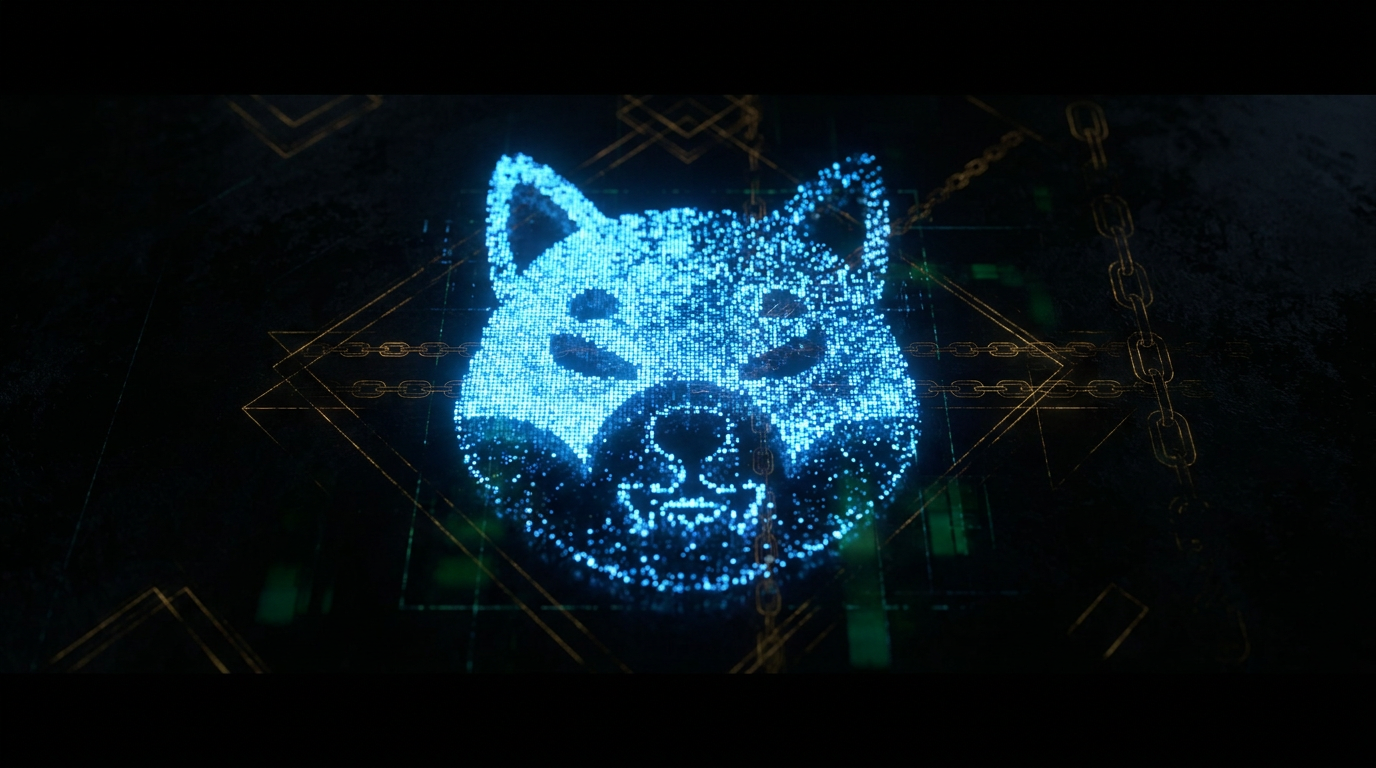
Doginals Explained: How Bitcoin Ordinals Came to Dogecoin
This article was produced with AI assistance and reviewed for accuracy.
Content is for informational purposes only and does not constitute financial advice.
Bitcoin Ordinals introduced a method for inscribing arbitrary data directly onto individual satoshis, and that architectural breakthrough did not stay confined to the Bitcoin network for long. Within months of Casey Rodarmor's Ordinals protocol launching on Bitcoin in January 2023, developers adapted the same inscription logic to Dogecoin, creating what became known as Doginals. This educational explainer covers how that inscription mechanism works, why it found a particularly receptive home on the Dogecoin network, and what serious participants in the Doginals ecosystem need to understand before engaging.
How Inscription-Based NFTs Work on Proof-of-Work Chains
Traditional NFTs on Ethereum or Solana store metadata and media off-chain, typically on IPFS or a centralised server, with a token contract on-chain pointing to that external resource. The NFT is, in effect, a pointer. Ordinals-style inscriptions invert this entirely: the content itself - the image, text, or code - is embedded directly into a transaction and recorded permanently on-chain. On Bitcoin, each satoshi (the smallest unit of BTC, 0.00000001 BTC) can be uniquely numbered according to the order it was mined. Data inscribed onto a specific sat becomes permanently associated with that sat's ordinal number, hence the protocol's name.
Doginals replicate this logic on the Dogecoin blockchain. A doginal is an inscription embedded into a Dogecoin transaction, recorded immutably on the DOGE chain. Because Dogecoin uses a proof-of-work consensus mechanism derived from Litecoin's Scrypt-based fork of Bitcoin, it shares the fundamental UTXO (unspent transaction output) structure that makes ordinal-style numbering possible. Each koinu (the smallest Dogecoin unit) can be tracked and inscribed, giving the Dogecoin chain a native, fully on-chain NFT capability that does not rely on smart contracts or external metadata hosts.
This matters for security and permanence. Because the inscription data lives inside the transaction witness data on-chain, there is no centralised server that can go dark, no IPFS pin that can expire, and no company that can delete the asset. The content persists for as long as the chain itself persists. For collectors and community members evaluating the long-term viability of a digital collectible, this is a structurally meaningful distinction from earlier NFT standards.
Why Dogecoin's Network Properties Suit Inscription Activity
Dogecoin's block time of approximately one minute is four times faster than Bitcoin's ten-minute target. Its block size cap of 1 MB matches Bitcoin's base limit, but the faster block cadence means the network can process a higher volume of inscription transactions per hour under typical conditions. Combined with transaction fees that have historically remained a fraction of Bitcoin network fees, Dogecoin offers a more accessible cost structure for high-frequency inscription activity - particularly for collections where minting hundreds or thousands of individual items would be cost-prohibitive on Bitcoin mainnet.
There is also the community dimension. Dogecoin has one of the largest and most durable retail communities in crypto, with a track record of sustained grassroots engagement that predates most of the current market cycle. That existing community provided an immediate audience for Doginal projects, and collections like Doginal Dogs demonstrated early on that demand existed not just for speculative trading but for genuine cultural participation - holding, displaying, and building identity around on-chain assets rooted in the Dogecoin ecosystem.
For a deeper grounding in how wallets interact with on-chain assets like Doginals, see our guide on Crypto Wallets Explained - understanding private keys and UTXO-based custody is essential before inscribing or transferring any ordinal-style asset. You can also trace how NFT infrastructure evolved to reach this point in The History of NFTs from Quantum to Doginal Dogs.
Inscription Mechanics: What Participants Should Understand
Inscribing a Doginal requires a wallet that supports the Dogecoin UTXO model and understands ordinal-style sat tracking. Unlike ERC-721 NFTs, where ownership is recorded in a smart contract's mapping, a Doginal's ownership is determined by who controls the UTXO containing the inscribed koinu. This means custody is fundamentally a private-key question: the person holding the private key to the address that holds the inscribed UTXO owns the Doginal. There is no contract to call, no platform to register with, and no account to recover. Lose access to the private key, and the inscription is permanently inaccessible.
This has practical implications for how participants store and transfer Doginals. Standard Dogecoin wallets that do not implement ordinal-awareness can inadvertently spend inscribed koinuts as regular transaction inputs - effectively destroying the inscription by disaggregating the tracked sat. Ordinal-aware wallets prevent this by flagging inscribed outputs and requiring deliberate action before spending them. Participants new to the Doginals ecosystem should verify their wallet's ordinal support before moving any inscribed assets, and should treat inscribed UTXOs with the same care they would apply to hardware wallet storage for high-value holdings.
The Fear and Greed Index currently sits at 69 (Greed), a reading that historically coincides with increased retail participation across digital asset categories - including inscription-based collections. Broader market enthusiasm tends to lift activity in secondary inscription markets, though the relationship is not mechanical and collection-specific fundamentals remain the primary driver of individual asset value.
What to Watch as the Doginals Ecosystem Develops
The infrastructure supporting Doginals continues to mature. Key developments to track include improvements to ordinal-aware wallet compatibility across mobile and hardware form factors, the emergence of standardised marketplace tooling that reduces the technical barrier to listing and purchasing inscriptions, and protocol-level discussions around expanded data type support within Dogecoin transactions. Each of these factors directly affects the liquidity and accessibility of the Doginals market.
Community participants focused on the long-term case for Doginals should monitor on-chain inscription volume as a signal of sustained developer and creator engagement, and assess whether new collections demonstrate genuine utility or cultural coherence rather than speculative minting alone. The collections that have retained community attention over time tend to share clear identity, active stewardship, and meaningful holder engagement - qualities that transcend any single market cycle. For broader context on how digital asset valuations move through cycles, the Bitcoin Market Cycle framework provides useful structural grounding. For community-focused wealth context, Australian Property Forum wealth context tracks how alternative asset communities approach long-term value building across market environments.
Frequently Asked Questions
What is a Doginal and how does it differ from an Ethereum NFT?+
A Doginal is an inscription embedded directly into a Dogecoin transaction, storing content fully on-chain. Unlike Ethereum NFTs, which typically use off-chain metadata hosted on IPFS or a server, a Doginal's content lives inside the transaction itself with no external dependency.
Can I store Doginals in a regular Dogecoin wallet?+
Standard Dogecoin wallets that lack ordinal awareness can inadvertently spend inscribed koinuts as regular transaction inputs, destroying the inscription. You need an ordinal-aware wallet that recognises and protects inscribed UTXOs before handling Doginals.
Why does Dogecoin's block time matter for inscription activity?+
Dogecoin's approximately one-minute block time is four times faster than Bitcoin's ten-minute target, allowing more inscription transactions to be confirmed per hour and making large collection mints more practical in terms of time and cost.
What happens to a Doginal if the marketplace platform shuts down?+
Because the inscription data is stored on-chain inside the Dogecoin blockchain, it remains accessible regardless of whether any marketplace or platform shuts down. Ownership is determined by UTXO control, not platform accounts.
How does the Fear and Greed Index relate to Doginals activity?+
The Fear and Greed Index, currently at 69 (Greed), reflects broader retail sentiment. Elevated greed readings historically correlate with increased secondary market activity across digital collectibles, though individual collection fundamentals remain the primary driver of specific asset values.
Get CoinHours in your inbox
Crypto markets, cycles and on-chain signals in your inbox.